

Super User
Whitepaper - "Discover the Possible" series - Blockchain
Welcome to our Discover the Possible Whitepaper exploring the possibilities of Blockchain
This is our first paper in the series and focuses on the potential of Blockchain technology, with specific case studies across Retail, Manufacturing and Finance. We review innovation in Identity Management, Asset and Provenance Tracking, and also examine the adoption of Blockchain in Financial Services. There is no denying that Blockchain comes with a degree of scepticism – firms must move the technology from the ‘theoretical’ to the ‘critical’ – and demonstrate a clear ROI. However, it is clear the technology is exciting, has captured the imagination, and is fuelling thinking and creativity at a break neck pace. There is a strong sense that we are at inflection point.
Blockchain technology has tremendous potential to be the revolutionary mechanism for business, that the internet was for media
Conceptualised in 2008 by Satoshi Nakamoto, the technology became the record-keeping technology behind bitcoin. It is a list of records, connected using cryptography, that provide an open, decentralised database of any transaction involving value or personal data. Decentralisation means that copies of the ledger are stored in many different locations and distributed across peer-to-peer networks, significantly reducing the risk of tampering or corruption.
Blockchain has the potential to disrupt a wide range of industries, revolutionising the management of data, and building immutable trust between businesses and consumers. Preparing for the undoubted change that comes with Blockchain adoption means investing in research and experimentation. The businesses who recognise this will be best placed to thrive in a new, innovative landscape.
Learn more about innovation in Identity Management, Asset and Provenance Tracking using Blockchain.
"Operators share a common objective, they want to improve the operational efficiency, reduce the cost, and eliminate fraud - DLT will help them to do all these things."
Gareth Mee, CEO, Invenica
"Uber are about to start offering financial services to their customers. This is an example of financial services being poured into each of the verticals and I think from a telco perspective, they are very much l at the forefront of that, will be able to have a billing circuit with most of the population."
Richard Crook, Director, LAB577
Blockchain FAQs
What is the technology and why is it valuable?
Blockchain technology offers transformative improvements for identity management. A central characteristic of Blockchain technology is its distributed, decentralised structure – obviating the need for third-party management. Blockchain is powering a personal data revolution. Relying on physical identity documents in an ever-growing digital age is outdated, cumbersome and expensive, but also increases the risk of fraud, hacking and spoofing. Events relating to the use of customer data for identification purposes can be stored on the Blockchain.
What does it mean for the user?
With so much of our life and commerce on-line the current methods of handling identity, usernames, passwords, authentication and user verification is error prone. Blockchain technology has established a new paradigm for handling digital identities – self-managed identity. Self-managed identity allows customers to create and manage their own identity, removing the need for a central repository. This new, digital concept using decentralisation and public key cryptography to give individuals control over their data. When implemented correctly, it can provide flexibility, scalability, security and consensual interactions. For the customer, this means they can transact in a frictionless, trusted, yet private manner. Identity management can also offer increased data privacy, identity is held on the user’s devices and is shared directly with products and services when required.
Our “Discover the Possible” series explores the challenges and opportunities of across the emerging technology landscape. “Discover the Possible” separates the fact from the fiction, translating the buzz words and jargon into simple plain language, and analysing real business use cases. The Invenica team collaborate with clients, partners and subject matter experts to produce White Papers, Webinars and Industry Articles to spark discussion and debate across the markets.
Welcome to our Discover the Possible Whitepaper exploring Edge Computing and Consumer IoT
In this White Paper we explore the opportunities for Edge Computing and Consumer IoT that will be unleashed with the advent of 5G and how the world will become truly connected, enhancing organizations’ output and citizens lives.
5G is the enabling technology for Edge Computing and Consumer IoT
Its improved infrastructure, speed and latency enable innovation, AI transformation and application development which will lead to businesses adopting more automation, working more efficiently and creating improved customer offerings that are tailored and personalised.
With the new bandwidth and speed that 5G offers, Cisco1 predicts that, during the period 2017- 2022, there will be 28.5bn connected devices (of which more than half will be machine-to-machine) that will generate approximately 4.8 ZettaBytes of data. Media and telecoms companies will benefit as virtual and augmented reality traffic skyrockets with huge increases in consumers and businesses using the technologies. Cisco also predicted that gaming too, will grow nine-fold and will be responsible for 4% of overall IP traffic by then.
Learn more about unlocking the potential of Edge Computing and Consumer IoT.
"Operators share a common objective, they want to improve the operational efficiency, reduce the cost, and eliminate fraud - DLT will help them to do all these things."
Gareth Mee, CEO, Invenica
"Uber are about to start offering financial services to their customers. This is an example of financial services being poured into each of the verticals and I think from a telco perspective, they are very much l at the forefront of that, will be able to have a billing circuit with most of the population."
Richard Crook, Director, LAB577
Consumer IoT FAQs
What is Consumer IoT and what will it mean for business?
The Consumer Internet of Things relates to connected devices aimed at the consumer market such as cars, home appliances, smart media devices, wearables that have sensors in them transforming all aspects of life in the home. From heating systems to water leak detection from intelligent fridges to smart security cameras, from lighting to entertainment, consumers can track and control devices via apps on their phones not to mention wearable tech like smart watches and glasses as well as sensors for pets – location trackers and interactive cameras. Smart home products and services can take over annoying chores and to recognise individual wishes immediately thus leaving consumers with more time for the things they love to do.
Why does Edge Computing matter?
Edge Computing is all about taking specific jobs from the cloud and putting them somewhere else. This “somewhere else” is not a predefined location. It could be anywhere between the client device and the cloud. Unlike traditional cloud computing, whose architecture is inherently centralised and vulnerable to distributed denial of service (DDoS) attacks and power outages, Edge Computing distributes processing, storage, and applications across a wide range of devices and data centres, which makes it difficult for any single disruption to take down the network. IT teams are sensitive to the risks involved whenever data is transferred between devices and the cloud and Edge Computing alleviates those risk by making much of that data transfer avoidable in some environments. With Edge Computing it is possible to filter sensitive information locally and only transfer important data to the cloud. This means enterprises can build an adequate security and compliance framework that meets their needs and ensures compliance with audits.
Our “Discover the Possible” series explores the challenges and opportunities of across the emerging technology landscape. “Discover the Possible” separates the fact from the fiction, translating the buzz words and jargon into simple plain language, and analysing real business use cases. The Invenica team collaborate with clients, partners and subject matter experts to produce White Papers, Webinars and Industry Articles to spark discussion and debate across the markets.
Welcome to our Discover the Possible Whitepaper exploring a perspective on retail
This White Paper focuses on how emerging technologies are disrupting the Retail industry. We review innovation in Data Insight, AI & Machine Learning and Voice Technology. There has been a shift in customer buying habits. The modern-day consumer has a new set of expectations – the high-street is being replaced by an on-line, always accessible, on-demand shopping experience. Retailers who embrace and harness the power of this change will succeed in an ever-changing, digitalised world.
The retail industry is at the intersection of a huge cultural and technological shift
The sector is undergoing significant change as emerging technologies continue to disrupt and transform the shopping experience both online and in store. Consumer buying habits have completely changed their relationship with brands and the high street. With smart phones, online shopping and mobile apps, customers have been driving an immersive, on-demand and convenient experience.
This is hitting the high-street hard with growing competition from on-line, falling profits, increased cost base, store closures, and some struggling to move with the times. In order to successfully keep pace with this change, businesses need to consider several factors when defining their e-commerce and digital transformation strategy. This paper overviews how Data Insight, AI Automation and Voice Technology are re-imagining and transforming retail – permanently.
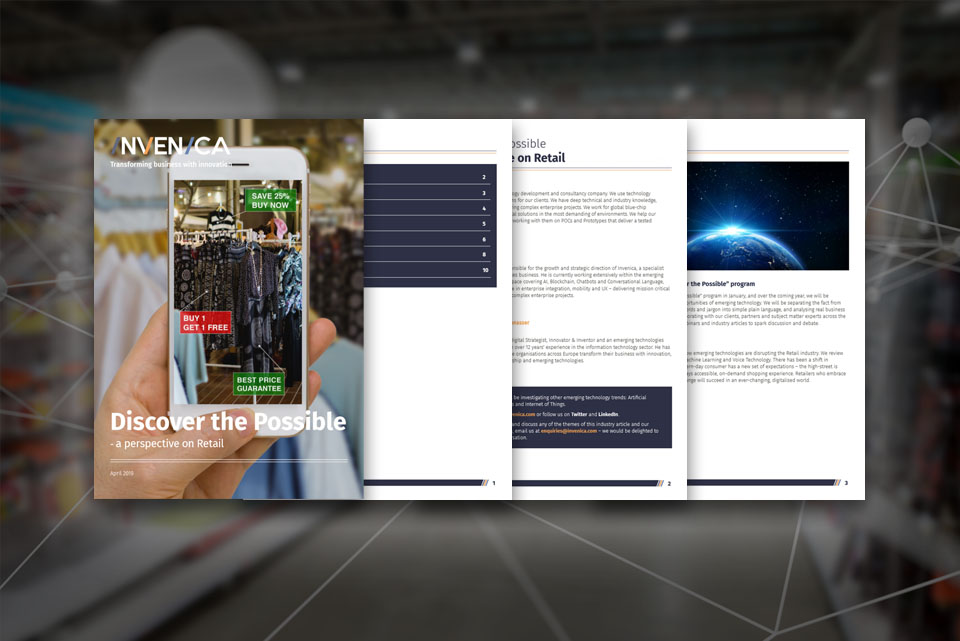
Learn more about how emerging technologies are disrupting the retail industry.
"Operators share a common objective, they want to improve the operational efficiency, reduce the cost, and eliminate fraud - DLT will help them to do all these things."
Gareth Mee, CEO, Invenica
"Uber are about to start offering financial services to their customers. This is an example of financial services being poured into each of the verticals and I think from a telco perspective, they are very much l at the forefront of that, will be able to have a billing circuit with most of the population."
Richard Crook, Director, LAB577
Retail FAQs
What does data insight mean for retailers?
Analysing data gives retailers a 360-degree view of their customers and prospects – correlating data from multiple channels (social media, online, apps, in-store), monitoring interaction on social media and recording customer purchase histories allows retailers to target advertisements and personalise promotions.
What does AI mean for retail customer engagement?
Advances in Natural Language Processing (NLP) are being used in solutions across AI, Machine Learning and Voice Technology. An example of AI-driven, customer-facing technology is chatbot platforms. Many retailers have integrated chatbots into their Facebook messenger channels, creating a personalised and conversational experience for their customers.
Why is voice technology valuable in the Retail Sector?
Consumer facing businesses need to manage multiple routes and channels to market. From bricks-and mortar to on-line, savvy firms have embraced innovation that puts the consumer experience at the heart of their channel strategy. From pop-up stores, through to experiential shopping events, the consumer “journey” is central.
Our “Discover the Possible” series explores the challenges and opportunities of across the emerging technology landscape. “Discover the Possible” separates the fact from the fiction, translating the buzz words and jargon into simple plain language, and analysing real business use cases. The Invenica team collaborate with clients, partners and subject matter experts to produce White Papers, Webinars and Industry Articles to spark discussion and debate across the markets.
Improving the quality and accuracy of chatbots

How to successfully leverage partnerships to the benefit of the client?
Invenica and Volume (with the use of their product QBox) have each been able to advance the digital transformation journey of one of our shared customers (the leading global telecoms operator referred to here). This customers wants to automate 60% of support requests by 2025; with the addition of QBox, this is going to be possible.
Building on Invenica’s work, QBox has been helping optimise the NLP training data (across multiple providers) by:

-
Extracting valuable performance data
-
Offering ongoing monitoring into key metrics of customers’ automations (enabling them to dramatically increase the number of support requests that can be automated)
-
Facilitating enhanced customer support
-
Realising significant operational savings
QBox is a piece of conversational AI middleware. Once a roadmap for the transformation of the customer-support function has been drawn up, QBox helps test, understand and fix NLP training data. It also provides ongoing monitoring support after the automation and AI customer agents have been introduced.
Chatbots, voicebots, chat engines and digital humans all require NLP. Once the conversational AI has been devised and integrated by Invenica, QBox offers incredibly deep and never-seen-before analytics that enhance a customer’s investment into conversational AI. By including QBox or the right customer, Invenica can offer a full-service solution, from inception to optimisation.
Invenica - QBox partnership

We have partnered with Volume to use their product QBox to help our clients optimise their conversational AI platforms
We have recently partnered with Volume, who have developed and brought to market a new and exciting conversational AI middleware tool: QBox.
This is a performance tool that improves the accuracy of a company’s conversational AI real estate. It tests your chatbot with your chosen provider and helps you optimise your training data. Our partnership promises to offer a full-service solution, to significantly enhance a company’s investment into conversational AI with the potential to realise very significant cost savings as a result of operational efficiencies.
QBox enables you to improve enterprise chatbots’ accuracy and performance in a matter of minutes, giving you 100% confidence to retrain and deploy. It analyses and benchmarks chatbot training data by visualising and understanding where it does and doesn’t perform, and why. This insight enables chatbot developers and NLP data modellers to make informed decisions about how they develop the performance and scale of their chatbots. Watch their video here!
QBox overcomes many of the challenges associated with managing your chatbot ecosystem and scaling your knowledge pool without impacting performance as your chatbot real estate grows.
QBox is NLP provider-agnostic: across all the major providers, it can improve the three global KPIs of clarity, correctness, and confidence of your models.
Our partnership introduces the potential to enhance companies’ investment in conversational AI across all sectors to make significant operational savings. The conversational AI market is growing significantly – and with strong partnerships like ours with Volume, we are very well placed to introduce the infrastructure and technology to help companies reach and exceed their targets, thereby potentially saving significant operational capital.


“Conversational AI is an amazing way to interact with a system or an application in a manner that most humans are used to. Making that conversation flow organic, proficient and accurate is a challenge that QBox helps solve.”
Gareth Mee, CEO, Invenica
Smart Cities & Smart Citizens Insights
Welcome to our Smart Cities & Smart Citizens Exploring 5G, IoT and the Connected World
Do we need a new vision for Smart Cities?
Whether people are ready or not, Smart Cities are here. The demand for the technology behind their development is already huge and will only keep growing. A report from PwC predicts that the global Smart City market will hit an annual growth rate of 23% by 2024, reaching a value in excess of $2tn (PwC, 2019). But what does it mean for the people living in these urban areas? Our whole notion of what Smart Cities represent is being challenged. We thought it would revolve around the ideas of connectivity, convenience, and access. Co-working spaces, better transport, and linked services are all hallmarks of what our IoT-connected cities can deliver. For the people we share our cities with – as well as the infrastructure required to deliver everything we may once have taken for granted. This is making us re-examine the relationship we have as citizens with every organisation we interact with – especially the firms and businesses we work with. So, what does this mean for Smart Cities – a concept that will touch on every area of our lives?
Building Smart Cities Around the People
Ultimately, the aim of any Smart City is to enrich the lives of its citizens – whether through better services or the creation of inclusive, healthy environments. That’s why any organisation involved in creating Smart Cities must look beyond siloed solutions for bikes, bins, and benches to develop systems that make a real difference to Smart Citizens.
After all, if the essence of urban development is individual action, a city can only be as smart as its citizens (Forbes, 2019). In this way, outcomes will be hugely important in Smart Cities – including the ability to measure how our cities empower the new Smart Citizens to improve their rights, wellbeing, health, security, and prosperity. Demonstrating the power citizens will have to shape new ways of life will be vital.
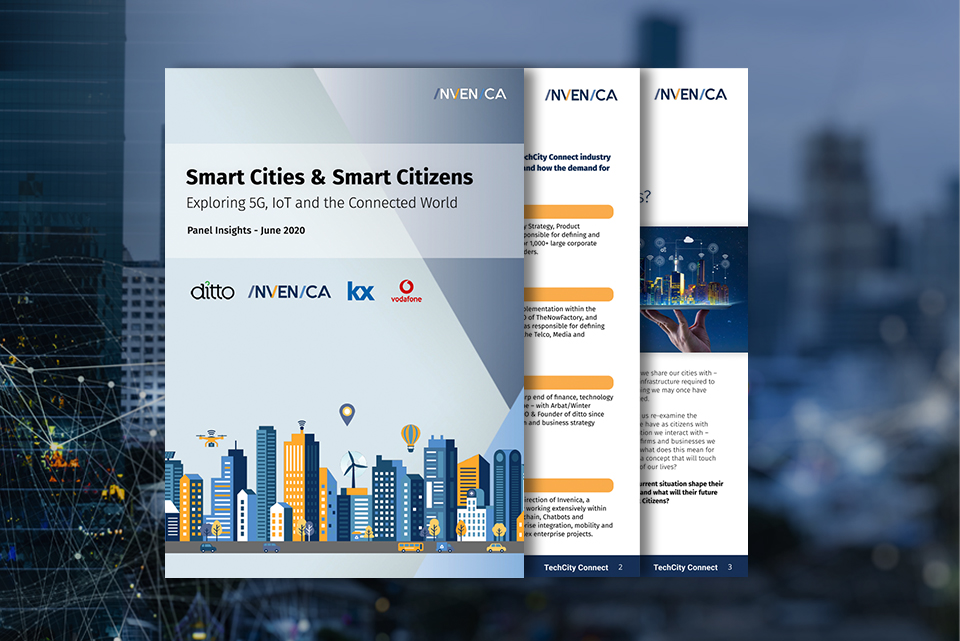
Find out more on our panel insights and discussions
"Operators share a common objective, they want to improve the operational efficiency, reduce the cost, and eliminate fraud - DLT will help them to do all these things."
Gareth Mee, CEO, Invenica
"Uber are about to start offering financial services to their customers. This is an example of financial services being poured into each of the verticals and I think from a telco perspective, they are very much l at the forefront of that, will be able to have a billing circuit with most of the population."
Richard Crook, Director, LAB577
Blockchain FAQs
What is the technology and why is it valuable?
Blockchain technology offers transformative improvements for identity management. A central characteristic of Blockchain technology is its distributed, decentralised structure – obviating the need for third-party management. Blockchain is powering a personal data revolution. Relying on physical identity documents in an ever-growing digital age is outdated, cumbersome and expensive, but also increases the risk of fraud, hacking and spoofing. Events relating to the use of customer data for identification purposes can be stored on the Blockchain.
What does it mean for the user?
With so much of our life and commerce on-line the current methods of handling identity, usernames, passwords, authentication and user verification is error prone. Blockchain technology has established a new paradigm for handling digital identities – self-managed identity. Self-managed identity allows customers to create and manage their own identity, removing the need for a central repository. This new, digital concept using decentralisation and public key cryptography to give individuals control over their data. When implemented correctly, it can provide flexibility, scalability, security and consensual interactions. For the customer, this means they can transact in a frictionless, trusted, yet private manner. Identity management can also offer increased data privacy, identity is held on the user’s devices and is shared directly with products and services when required.
Our “Discover the Possible” series explores the challenges and opportunities of across the emerging technology landscape. “Discover the Possible” separates the fact from the fiction, translating the buzz words and jargon into simple plain language, and analysing real business use cases. The Invenica team collaborate with clients, partners and subject matter experts to produce White Papers, Webinars and Industry Articles to spark discussion and debate across the markets.

When it comes to getting in touch with companies, customers really don’t want to be left hanging on the line. They want a rapid response to their queries - and they’re happy to take their business elsewhere when they don’t get this.
According to research from Hubspot, nine out of ten customers rate an ‘immediate’ response as important when they have a customer service question. This has led to a situation where two-thirds of customers have become ‘serial switchers’, changing brands due to a poor experience – something that’s costing businesses more than $75bn a year.
It’s in this context a Tier 1 bank in the Americas turned to Invenica for help. The firm’s call centre handles millions of customer calls every year. However, until recently, they relied solely on a traditional dual-tone multi-frequency (DTMF) interactive voice response (IVR), a legacy touch-tone system that was having a negative impact on the bank’s customer experience. The system’s menu tree was often difficult to use, causing customers to get lost and even abandon their calls. The bank needed a new system that could improve the customer experience and drive customer retention.
The solution was an AI conversational language platform and customer service virtual agent (VA) able to help customers find answers to their enquiries as quickly as possible – both in free speech and text. The challenge with producing and deploying such a system was that it needed to handle significant levels of complexity. The bank had set high benchmarks for performance in semantic accuracy and task completion. It also required the VA to be capable of serving customers speaking English and local dialect in a mixed-language model – something no contact centre had ever implemented before.
What we did
To develop the solution, Invenica used the technical expertise of its DisruptCX (DCX) practice, which specialises in supplying emerging technology to contact centres. Following a review of the bank’s existing systems, DCX swiftly identified a conversation language platform and VA as the solution best suited to meet the project’s needs.
From there, DCX selected a platform and designed and deployed a VA able to retain context around multiple customer queries in a single conversation. This was supported by the use of machine learning to continuously learn new patterns and improve predictability – allowing the bank to serve customers who are unable to express what they want as clearly as others.
DCX then developed and tested algorithms for dealing with the uncertainty of voice input. So, for example, where the confidence in the intent of the voice input is below 90%, the engine provides up to five inputs that it believes could be accurate. These are sorted by likelihood, with mathematical checks used to confirm which input is the most likely to be correct. Invenica added to this with an application that helped the platform to learn and improve the bank’s self-service conversion rates.
Invenica leveraged its previous R&D project experience – along with its expertise in the development of microservices – to implement the capability for continuous improvement, allowing the platform to be extended in novel ways. In developing a modern microservice ecosystem of functional components, Invenica made it easier for the platform to respond to the bank’s changing requirements while minimising disruption to the customer experience.

What we delivered
With so much complexity and uncertainty involved, the Bank needed a solution based on a scientific and research-driven approach. That’s why Invenica and DCX delivered an AI-powered conversational language platform and VA that could not only handle customer enquiries more efficiently but also learn from each one. Every conversation the platform now has with customers improves future outcomes as it encounters new scenarios and ever-more complex interactions.
The platform meets all of the bank’s KPIs for intent accuracy and task completion rates. It also provides multi-language support for customers speaking English and local dialects. Ultimately, this provides the bank with the best possible platform to improve its customer experience, drive retention rates and cut operational costs by taking the pressure off its existing systems and contact centre agents.
Meet The Disruptors - Delivering Innovation


Meet The Disruptors – Delivering Innovation
Invenica recently hosted a series of online sessions at Meet The Disruptors, two days of digital events designed to showcase the future of fintech. Providing a showcase of emerging technology and business change, the Invenica team was joined by guests from Concord, Siemens and Vodafone.
Across three sessions – Meet The Team, In The Market and In Action – experts from all four firms discussed the business and technology drivers of Big Data, AI, user experience and automation. Their insights highlighted how businesses are finding ways to harness breakthrough innovation to tackle their biggest challenges.
All three panels featured a wealth of knowledge and experience, offering attendees a unique perspective on the world of emerging technology. And, whether you could make the event or not, there’s no reason to miss out. You can replay or catch up on all the Invenica sessions at your leisure below.
Delivering Innovation: Telco, Commodities & Trading - an industry showcase
Meet The Team
Invenica has deep experience spanning nearly two decades of providing technology consulting, systems integration and technology innovation; dedicated to solving difficult problems for customers. During this session, Gareth Mee, CEO of Invenica, and Moustafa Bounasser, CTO, shared their insights on how Invenica is working with clients to drive innovation and discover the possible.
- Gareth Mee, CEO - Invenica
- Moustafa Bounasser, CTO - Invenica
- Mike Wilson, CEO & Founder - ditto
In The Market
Invenica helps clients in the Commodities & Trading sector to adapt and take advantage of technology across their business workflows. This session, featuring panellists from Concord and Siemens, explored how we enable businesses to handle transformation, regulation and automation – without the cost of having to scale up their IT resources.
- Moustafa Bounasser, CTO - Invenica
- Barry Gould, CTO - ConCord
- Nadja Haakansson, MD Region Africa - Siemens
- Michael Imeson, Senior Content Editor, Financial Times (Moderator)
In Action
In this session, Gareth Mee, CEO of Invenica, was joined by David Palmer, Blockchain Lead IoT for Vodafone. They explored how telcos can go beyond the edge to explore decentralised digital identities, digital communities, adaptive cybersecurity, Internet of Things products and enhanced customer experience.
- Gareth Mee, CEO - Invenica
- David Palmer, Blockchain Lead for IoT - Vodafone
“We have been innovating for our customers for over a decade – using new technologies, new methods and processes to build new applications or customise and enhance existing systems – we are exceptionally proud of our delivery and the time and money we save or partners. Our ambition is simple – to continue innovating and to be recognised as a market leader for emerging technology development and systems integration.”
Gareth Mee, CEO, Invenica
“We simplify and accelerate digital transformation for our customers through innovation. Our ambition is to be a strategic trusted IT partner that contributes to the success of your organisation”
Moustafa Bounasser, CTO, Invenica
About our Speakers

NADJA HAAKANSSON - Managing Director Region Africa, Siemens
Nadja is an Energy leader from Sweden who has international experience and previously led the Power Generation Service organisation in Thailand. She is currently the Regional Director of Gas & Power Services for Distributed Generation and O&G for Africa, and also CEO of the Siemens Energy business in Morocco.
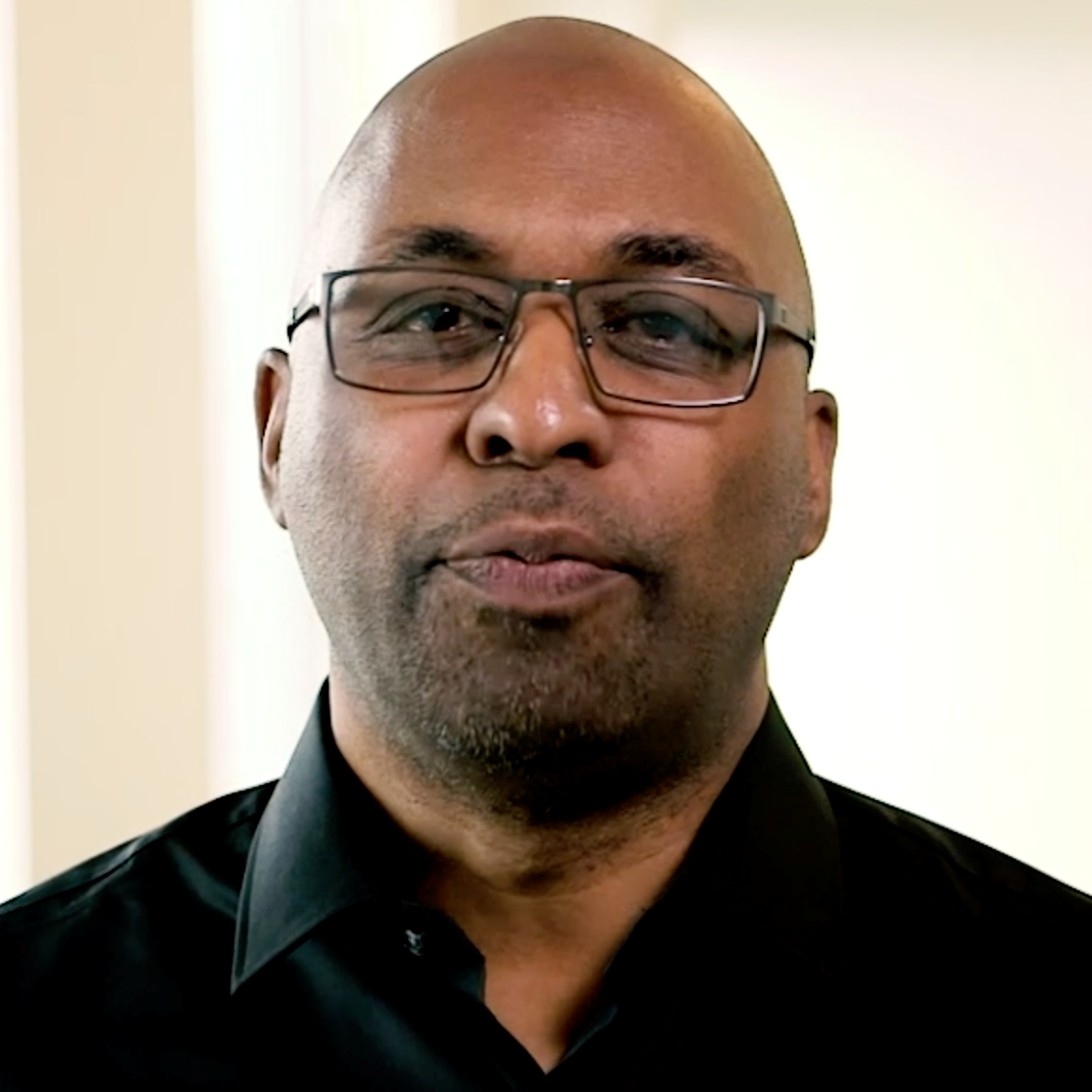
DAVID PALMER - Blockchain Lead for IoT, Vodafone
David has worked in the IoT sector for 10 years and has been instrumental in the Vodafone Business assessment and exploration of blockchain technology and its potential to add value in the IoT eco-system.

GARETH MEE - CEO, Invenica
Gareth Mee is responsible for the growth and strategic direction of Invenica, a specialist software services business. He is currently working extensively within the emerging technologies space covering AI, Blockchain, Chatbots and Conversational Language, with experience in enterprise integration, mobility and UX – delivering mission critical solutions and complex enterprise projects.

MOUSTAFA BOUNASSER - CTO, Invenica
Moustafa is a Digital Strategist, Innovator & Inventor and an emerging technologies enthusiast with over 12 years’ experience in the information technology sector. He has helped multiple organisations in the UK, Germany, France and Belgium transform their business with innovation, thought leadership and emerging technologies. He has worked in different roles across the IT industry and contributed in creating new capabilities, programmes and initiatives. With extensive experiences across different industries such as financial Services, Manufacturing, Media, telecom and many others, Moustafa combines his in-depth knowledge of technology, and understanding of industry challenges, to create differentiation values and new markets for his clients. Moustafa has several confirmed and pending inventions to his name, leveraging technologies like Blockchain, Artificial Intelligence, Machine learning and IoT, he is involved in the research and development of cutting & bleeding edge technologies like Edge Computing and Quantum Computing.

BARRY GOULD - CTO, Concord
Barry has shown successful transformational leadership, CTO level & 3rd parties, delivering ‘fit for purpose’ IT solutions, IT separation and business change. Highly accomplished, able to design and execute effective IT delivery strategies & technology roadmaps. Experience of driving change management, business transformation, outsourcing, service transition, project strategies, technology roadmaps, business separation, divestments, IT/data migration and business benefit realisation. Technology advisor, experience and due-diligence in areas such as Financial Services, Commodities, Accounts receivable & factoring, Medical and Pensions. Advisor for not for profit organisations as well as investor and mentor for a number of new technology start-ups and accelerators.

Trading metals can be a time-consuming and expensive process, which is why automation is the key to closing deals quickly and increasing trade volumes.
Concord is a leading global commodities group with a focus on non-ferrous metals and associated raw materials. It supplies metals to a world-wide customer base that includes automotive firms, major manufacturers and national governments. Looking to build on revenues of more than $4bn, Concord was exploring ways to increase its trading volumes – improving its market share and overall profitability. However, the firm faced a few challenges in achieving this aim.
One such issue was the lack of automation in its processes, which meant that closing deals took a more time and effort than was ideal – and made the pursuit of opportunities more difficult in some cases. Also, the time it took for individuals to manually process a deal increased the cost to do so. Increasing trade volumes at pace in this environment was tough as well. In some instances, traders were only able to complete a limited number of deals each year. New buyers were also hard to come by, and Concord was looking for new ways of reaching customers that wouldn’t be time-intensive for its traders.
This was made more challenging by the availability of individuals across the business. With three offices (in China, the UK and the US), clients in different locations didn’t always have as much access to traders as they might have wanted. To address these issues, Concord turned to Invenica to make it easier for traders to connect with new and existing buyers. Concord was confident that, with its track record for delivering digital platforms and its understanding of the industry, Invenica would be able to provide the right solution.
What we did
To begin the project, Invenica held workshops with all the relevant stakeholders within Concord to understand the pain points at every level of the trading process. This ranged from the C-Suite leaders to the traders on the ground. With the knowledge of the challenges, the markets and any restrictions, Invenica got to work on designing a responsive website that would serve as a digital marketplace. The idea was that each trader looking to sell an asset would be able to access that marketplace and publish all the information needed to attract buyers. Once they fill in an e-form about the commodity itself, they publish it and the asset appears on the marketplace.
This worked in a similar way to sites like Amazon. Buyers would access the marketplace to see available products or use the intelligent search function to find what they’re after. They could either bid on, purchase or make an offer on the product – with actions generating a notification for traders to begin engaging with the buyer.
As well as intuitive customer-facing tools, Invenica created a back-office system in the marketplace to offer extra value to Concord and its traders. Users were able to access a dashboard that provided information about trade volume, the types of product available, and all the previous or ongoing deals. To make the trading process simpler and quicker, Invenica provided an interactive form designed to reduce the time taken to share assets with potential buyers. Learning from existing platforms, the developers created an automated process that allowed made it as easy as possible for users to upload forms featuring multiple pages of information.
Another feature Invenica built into the platform was a chatbot that allowed potential buyers to enquire about products not showing as available on the marketplace. It also gave them the ability to ask any questions or leave remarks for traders.



What we delivered
In three months, Invenica delivered a digital marketplace that accelerated Concord’s trading process and allowed it to drive growth in trading volumes. Traders can now upload information and deploy assets to the marketplace in minutes. Engagement with buyers is easy too, with traders getting notifications for orders so they can make decisions quickly and effectively. Then they can start the process of the trade itself – getting deals closed as swiftly as possible. The new platform has also created a new inbound channel for Concord. Finding new customers before meant calling people directly – the firm relied on word-of-mouth sales. With the new marketplace, Concord now attracts traffic it wasn’t previously able to access.
Invenica continues to provide ongoing support and maintenance for the marketplace, making sure it delivers 24/7 uptime.

To be successful, a trading platform must – above all else – make transactions as easy as possible for its users. The challenge with this is that ‘easy’ is an ever-shifting concept that encompasses a wide range of factors.
For example, speed is a key component for traders in volatile markets. They need to be able to action a trade at the touch of a button if they’re to protect profitability against price fluctuations. However, expectations in this area change constantly as performance improves – and platforms need to make sure they can keep up.
This isn’t the only area where customer and market expectations are changing rapidly. The increase in mobile adoption among businesses – along with the cultural weight of smartphone use in everyday life – is driving a move towards mobile trading. In 2018, six out of ten traders were using mobile apps to complete trades – a figure that’s likely to be significantly higher now (especially with remote working becoming the norm). Today, traders are demanding platforms that not only help them make transactions quickly and easily but also allow them to do this on the move. ‘Easy’ in trading has moved away from the mouse and keyboard to embrace mobility. This is the backdrop for LMAX asking Invenica to develop the mobile functionality of its trading platform. Looking to keep up with market expectations, LMAX wanted the ability to provide its clients with an end-to-end mobile solution – all without losing its unique selling point, the speed of its exchange and trading systems.
The idea was to deliver a mobile trading platform that enabled users to easily trade a growing number of complex derivative products. This complexity would be mirrored in the project itself, with the need to meet strict standards in critical areas like financial services compliance and mobile security. The mobile functionality had to recreate the same trading environment as LMAX’s main platform. This meant meeting anti-money laundering (AML) and know your customer (KYC) requirements – a key piece of the puzzle considering that by 2019 a new record of $8.14bn in fines handed out to firms for AML breaches globally.
What we did
Cybersecurity was also a major concern and with the attacks on mobile devices rising dramatically year on year a key requirement. Invenica had to make sure that this new entry point to LMAX’s trading data didn’t create any vulnerabilities for hackers to exploit – especially with no control over the devices being used to access and trade on the platform. The challenge was then providing all of this as part of a high-speed, high-performance platform. Invenica tapped into its considerable experience of complex logic handling over mobile networks, ensuring that this new process was able to match the exchange performance expected by LMAX’s clients. This included the development of protections against any errors caused by mobile networks that might prevent a trade or create conflicting data.

Invenica also worked in tandem with the LMAX development team to track the changes that were continuously altering the architecture and integration services of the main LMAX platform. The new mobile trading environment had to replicate functionality or risk failing to meet users’ needs. Ultimately, the Invenica team planned, designed and executed the delivery of an end-to-end mobile trading platform that retained LMAX’s hallmarks of high speed and high performance. The project took everything that makes LMAX’s desktop platform a leading matching venue for traders and brought it to life in the palm of traders’ hands as part of a simple but effective mobile experience.

What we delivered
The new mobile platform featured full compatibility for iOS and Blackberry devices (even including several models known for presenting a barrier to the implementation of high-performance services).
The completed mobile solution included the following key features:
• Strict Financial Services compliance
• Best-of-breed security using government-approved algorithms
• Protection against errors driven from the mobile network
• Full iOS & Blackberry compatibility
Invenica’s platform was more than able to deliver performance in line with key performance requirements specified by LMAX – succeeding in its aim to make trading as easy as possible for clients.